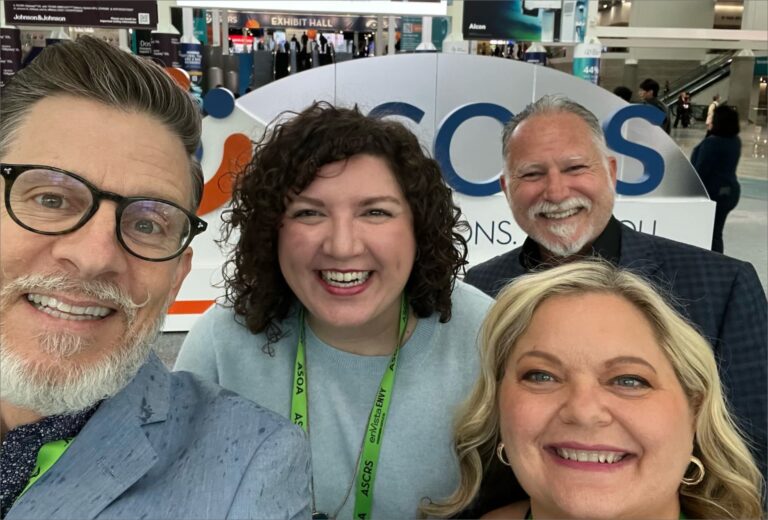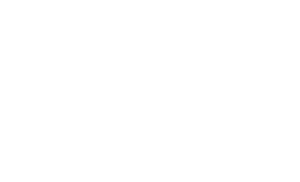
Walking the floor at AAD this year, one thing became hard to ignore:
Dermatology didn’t feel like a single, cohesive specialty. It felt curated.
Not smaller. Not narrower. But selectively on display.
And that’s not because anything fundamentally changed overnight. Trade shows don’t create trends, instead, they expose them. What AAD made clear is something that’s been building for a while: dermatology is concentrating. And that concentration is organizing itself around poles. Two gravitational centers pulling attention, investment, and energy in opposite directions while everything in between gets quieter.
Three poles. One pattern. And a question worth asking about what it means for the brands navigating all of it.
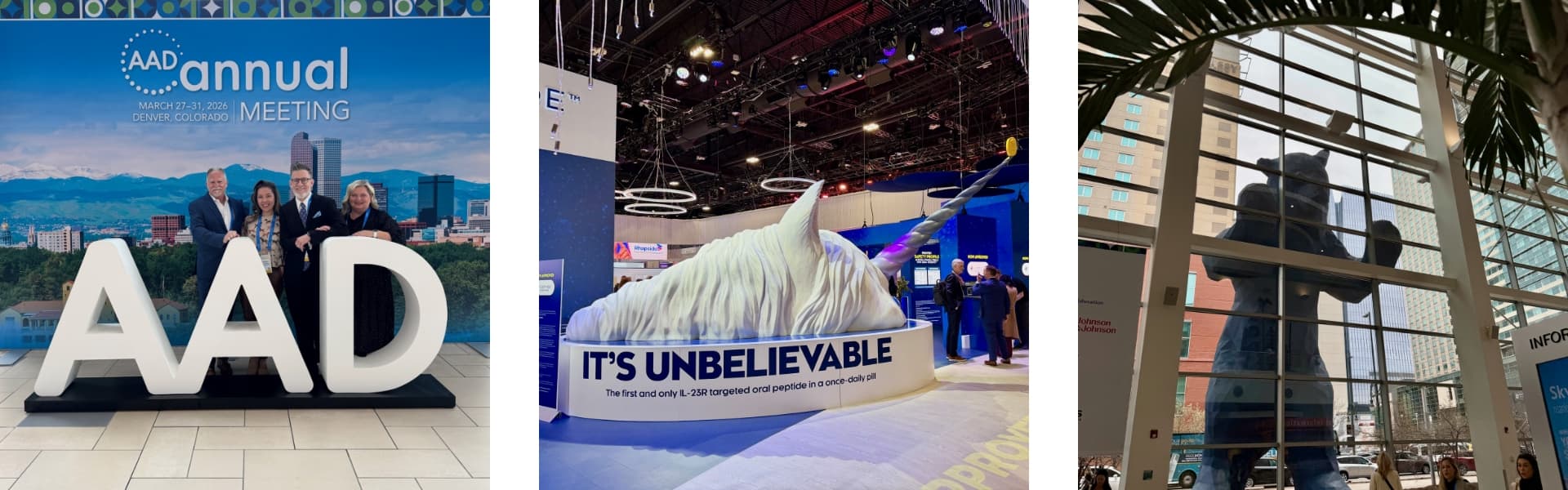
Pole One: The Specialty Is Voting With Its Investment
Aesthetic skin health on one end (see: L’Oreal and Revance). High-value biologics on the other (see: UCB, J&J). Cash-pay and blockbuster reimbursement pulling toward the extremes.
What was quieter was the middle. The bread-and-butter conditions that built the specialty (acne, rosacea, routine inflammatory disease) didn’t disappear. But they weren’t where the momentum was. And they weren’t where the booths were.
This isn’t shocking. Economics have been pulling in this direction for years. The more unsettling question is what it signals about the specialty’s priorities. Are those conditions considered solved? Is the payer environment discouraging mid-tier innovation? Are dermatologists deliberately ceding routine care to NPs and PAs, reclaiming their time for complexity and margin?
Probably some combination of all three. But here’s what concentration creates regardless of cause: crowded poles. When investment clusters, differentiation collapses. Aesthetic brands start to sound like aesthetic brands. Biologic brands start to sound like biologic brands. While that may not necessarily be a bad thing on the surface, if the category language becomes shared property, what should feel like choice starts to feel like sameness.
That’s not a pipeline problem. It’s a clarity problem.
Pole Two: Burden vs. Empowerment — and Why the Difference Matters
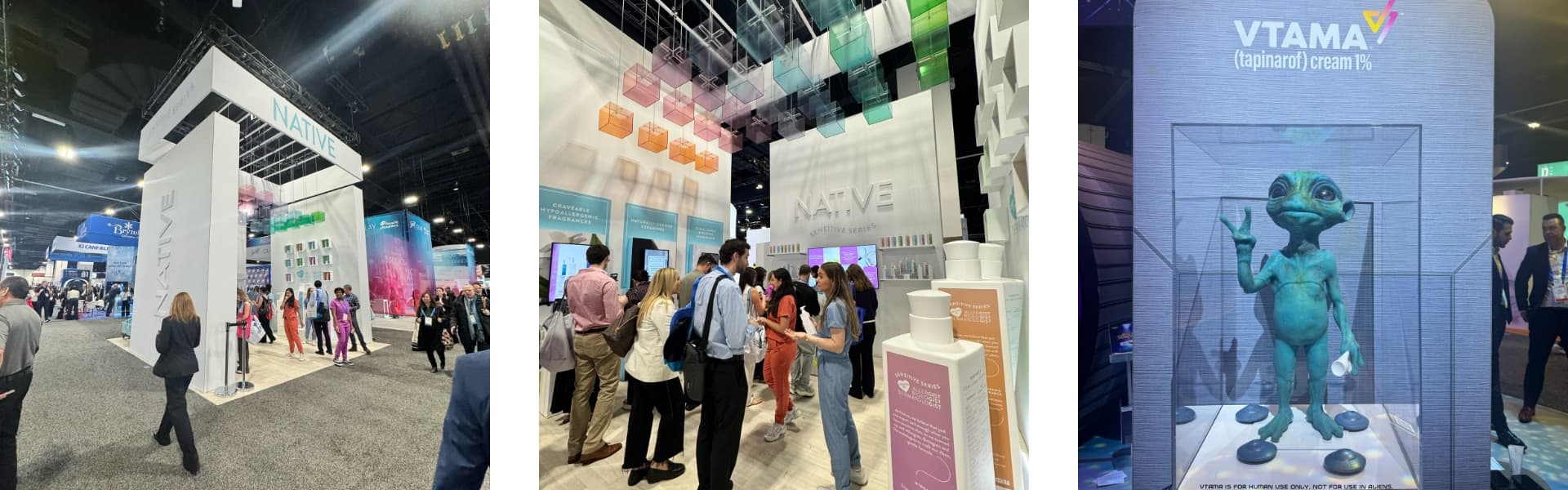
You could see the second pole most clearly in the growing focus on vitiligo.
Is its presence a signal that an underserved space is finally getting its due, or a category reaching a new level of commercial and cultural visibility? But what stood out more wasn’t the volume. It was the divergence in how brands chose to show up.
Some leaned into burden. Severity. The emotional weight of the condition. For example, Incyte shared a compelling burden-reflection tool tied to clinical trials that personalized the condition for HCPs.
Others took a different route — framing vitiligo through confidence, identity, and lived experience. This was most compelling in the Clinuvel booth experience which was another high-impact journey of pride.
Same condition. Two very different narratives. And anecdotally, the empowerment conversations ran longer and drew more genuine engagement.
The difference isn’t just philosophical — it’s practical. Because what matters isn’t just whether a message informs a provider. It’s whether it gives them something to say. The messages that stuck weren’t necessarily the most clinical or the most emotional. They were the most usable. The ones that could travel across the desk and hold up in an actual patient conversation.
That’s the bar. Not: does this educate? But: does this translate?
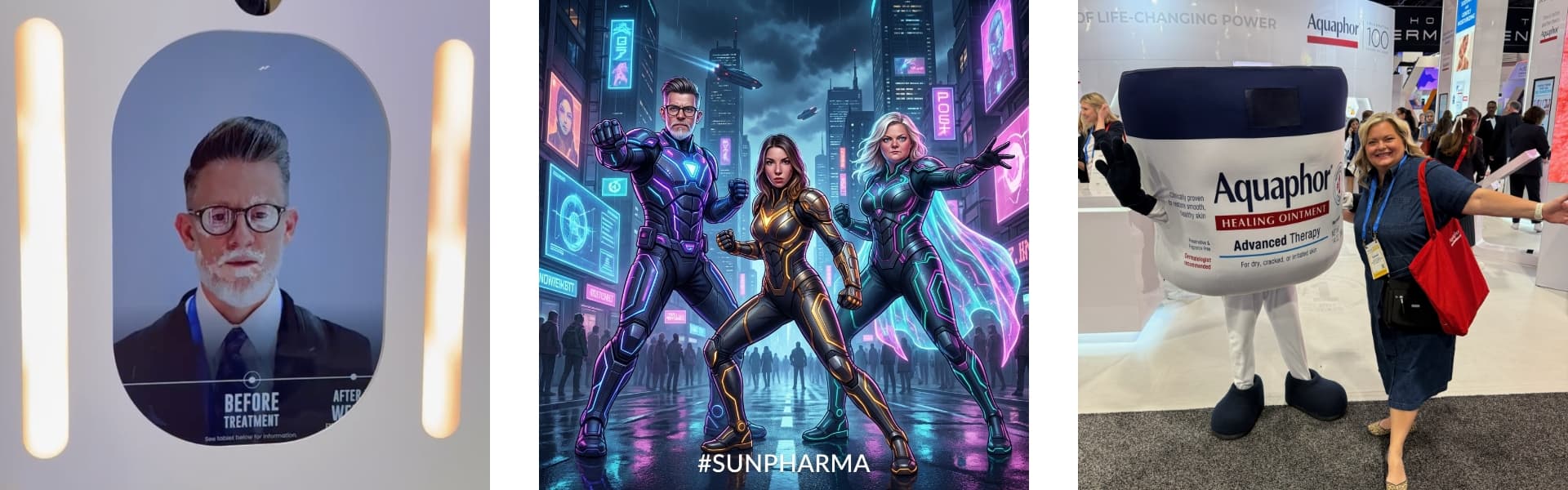
Pole Three: Spectacle vs. Substance on the Show Floor
AAD also makes something else obvious: attention isn’t evenly distributed.
Big brands build experiences. They dominate space. They create gravity. Smaller brands like emerging players and device companies are fighting for visibility at the edges before the doors even open.
But here’s the uncomfortable question: how much does that actually matter?
Because the booth is a moment. A controlled one. What happens after is the real test. Can a provider remember what you are? Can they explain it simply? Can they confidently recommend it?
If your story only works when someone is standing inside your booth, it’s not a strong enough story.
Spectacle earns attention. Substance earns recall. And the substance that travels isn’t the most complex. It’s the one that’s most usable.
The Through-Line
Every pole visible at AAD this year — structural, emotional, tactical — points back to the same pressure. When investment concentrates, when patient expectations shift, when the show floor rewards scale, the brands that hold up share one trait: a message that works without the scaffolding.
That means having a clear role in an increasingly polarized category. Translating complex science into something providers can act on quickly. Building a story that survives the jump from booth to hallway conversation to five-minute patient visit.
Because no matter how far the specialty drifts toward poles, the most important moment hasn’t changed.
It’s still a provider deciding what to recommend, in real time, with limited attention and even less patience.
The brands that win won’t be the ones optimized for the biggest stage. They’ll be the ones that work everywhere else.
What did you take away from AAD this year? I’d welcome the comparison.