Situation
In a category defined by clinical credibility and cold, white-coat confidence, a global eye care leader faced a deeply human problem: nobody was listening.
Independent optometrists — the doctors most critical to driving contact lens prescriptions — were tuning out. Brands were showing up with shiny new launches and aggressive messaging, and the perception was spreading that this client, despite a portfolio with genuinely best-in-class technology, had gone quiet on innovation. Meanwhile, the very platform designed to transform how practices managed patient reorders — a digital tool proven to improve satisfaction and drive revenue — was being underutilized simply because busy staff didn’t have time to be sold to.
The annual IDOC Connection conference represented a high-stakes opportunity to change all of that. Three thousand independent optometrists. One room. A shot to shift the narrative.
The temptation was obvious: lead with data, stack the deck with stats, reassert authority. But authority wasn’t what the audience needed. They needed to feel seen.
Goals
- Re-earn trust from ECPs who had begun drifting toward competitors, particularly among members prescribing less than a third of their contact lens volume through the brand’s portfolio.
- Reignite enthusiasm for a flagship daily lens — a proven product whose comfort technology remained unmatched, but whose time in market was being used against it.
- Drive meaningful adoption of a digital ordering platform that could genuinely transform practice profitability, but had struggled to break through the daily noise of a busy optometry office.
Success was measured in action: booth engagement, education session attendance, and ultimately, the willingness to buy.
Approach
At Schaefer, we believe humanizing is a strategic choice. One of the most human things a brand can do is make people laugh.
We know laughter is how people lower their guard, open their minds, and actually receive new information. Humor is trust, compressed. It says: we know what you’re dealing with, and we’re not going to pretend otherwise.
So instead of producing another polished, authoritative product film, we made a mockumentary.
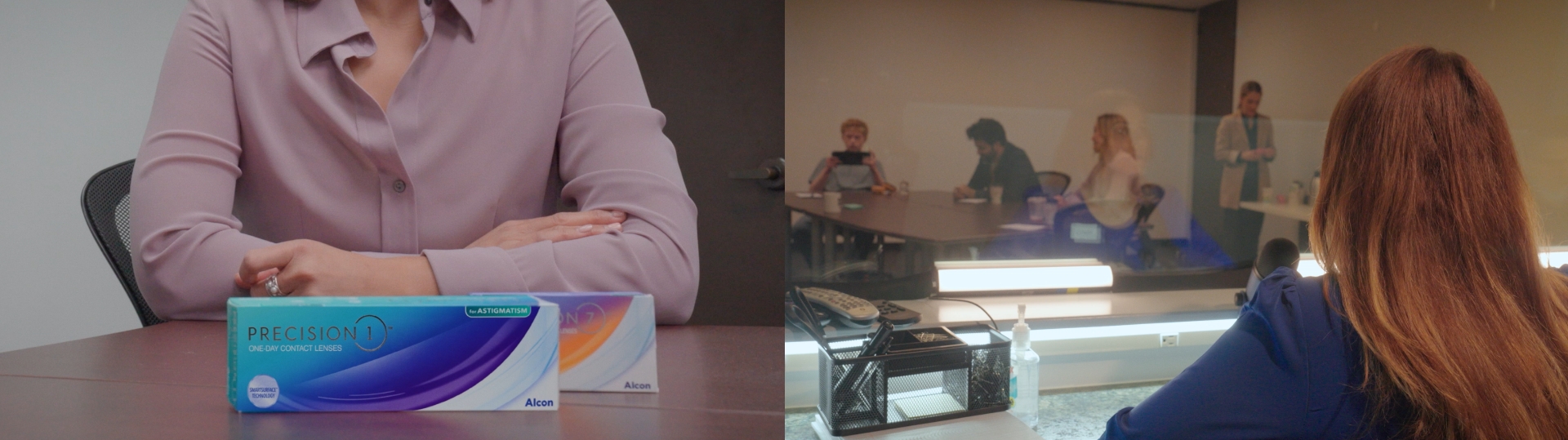
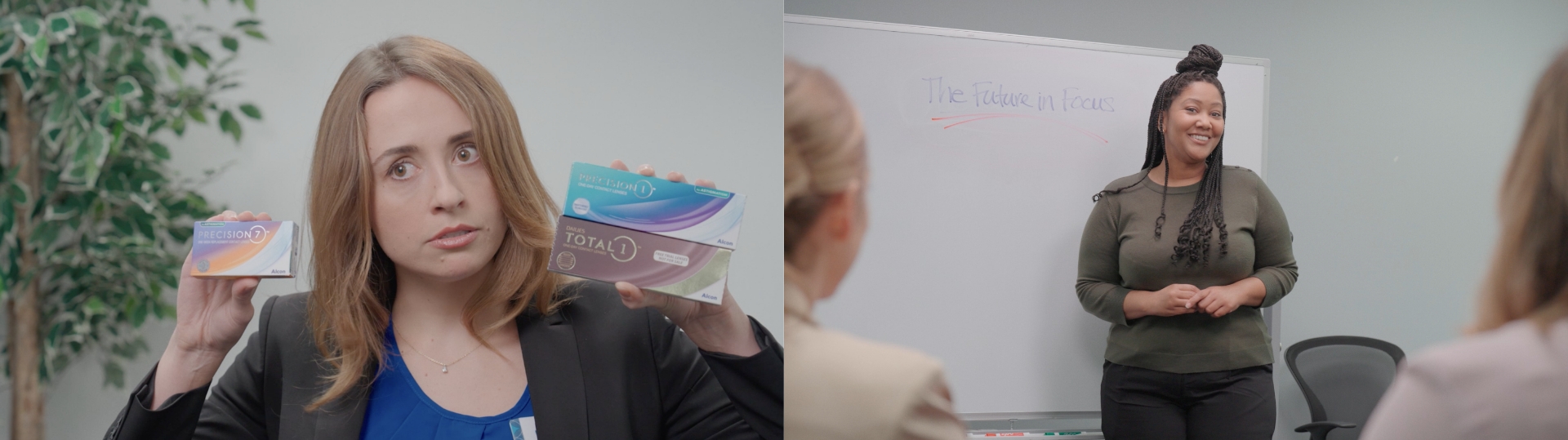
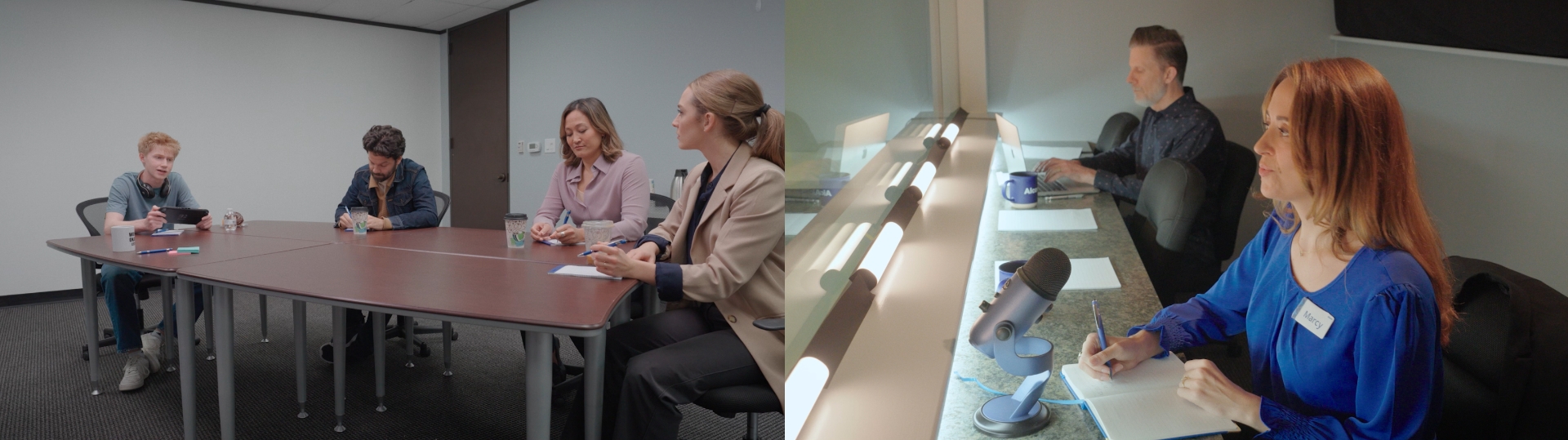
Focus Group of the Future dropped an entirely mismatched cast of characters into a fluorescent-lit conference room and asked them a deceptively simple question: what does the future of eye care look like? The group proceeded to hilariously, authentically, and thoroughly answer that question without ever once being asked to sit through a product presentation.
Confessional cuts. Awkward pauses. A moderator slowly losing control of the room. Props with running jokes. A character who keeps shouting product names through soundproof glass. Every laugh was engineered to land a message.
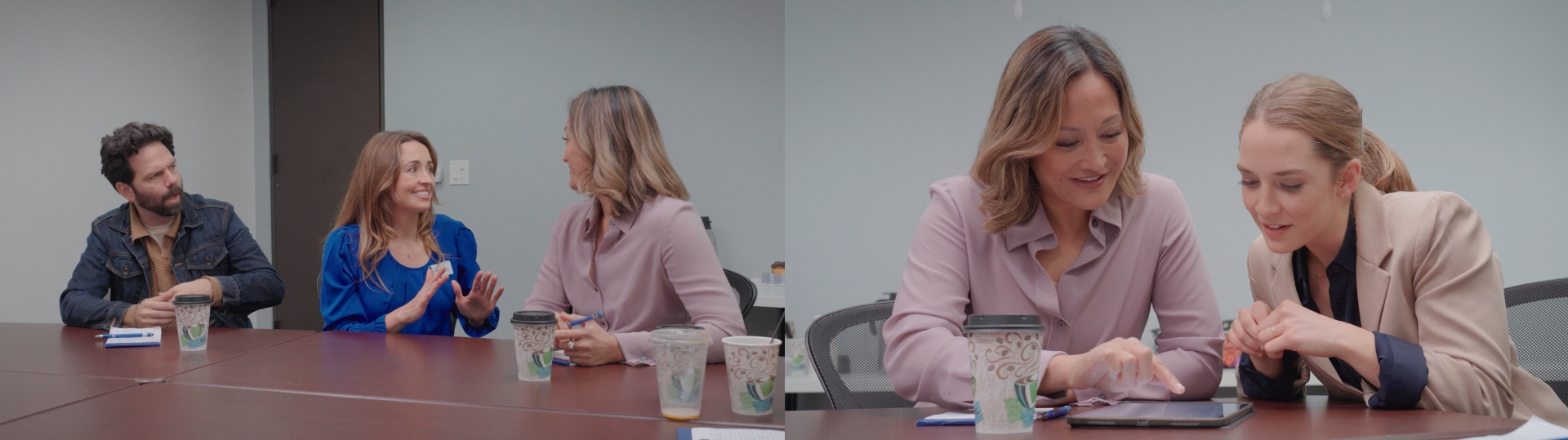
Every scene was structured around a real audience objection or ECP insight pulled directly from strategic research. The film turned hard truths into the story. Because the insight at the heart of the campaign was creating awareness that the future your patients are asking for already exists, and you’re the one who gets to give it to them.
In a category where content is often forgettable the moment an attendee leaves the session, we built something that could travel without losing its energy or its point. We helped our client honor the science and care by making it accessible and human.
Results
Humor in healthcare isn’t always a risk. When patients are overwhelmed, when doctors are burned out, when staff are stretched thin, the brands that show up with joy — real, earned, strategically deployed joy — are the ones people remember. And the ones people trust.
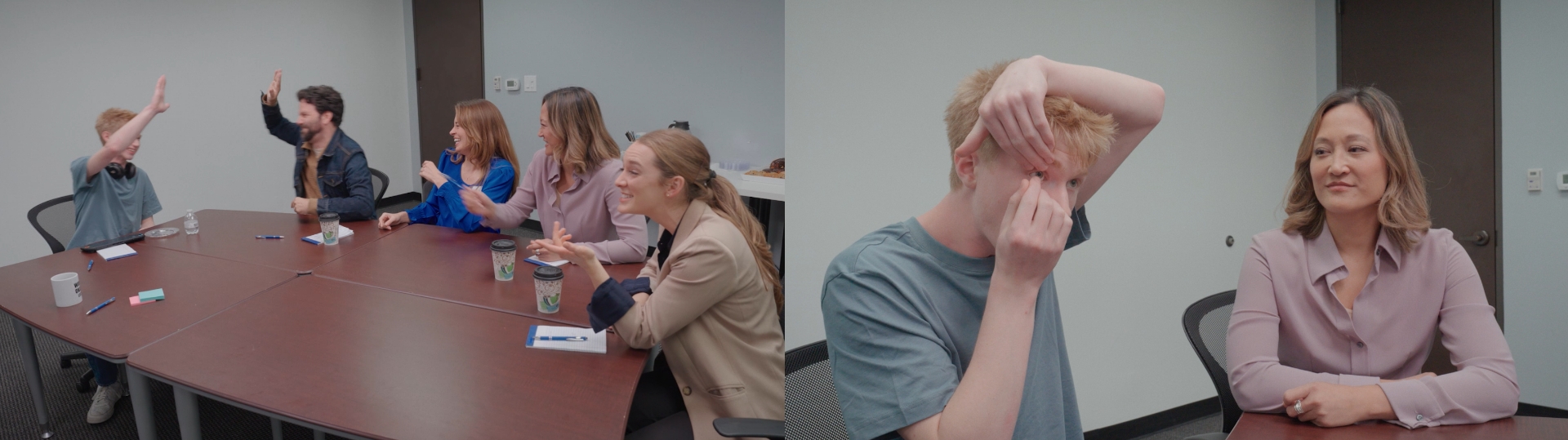
The future of eye care, it turns out, looks a lot like a conference room with bad muffins, a rep who can’t stop shouting through glass, and a fifteen-year-old who is absolutely not emotionally ready to touch his own eye.
And that’s exactly the point. Ready to make your audience feel something? Let’s talk.